 Shantou Sunnytec Electronics Co., Ltd.EN
Engineering selection guide
How to select 28, 40, 80, 120 or 200 kHz for ultrasonic cleaning
Frequency selection should consider contamination, part material and delicacy, tank design, liquid medium, power density and mounting—not frequency alone.
Start with the part and contamination
Define the part material, surface finish, holes or blind features, contamination and acceptable surface impact first. The same frequency can behave differently with a different tank, liquid and load.
- 28–40 kHz: commonly considered for general industrial cleaning and robust parts.
- 68–120 kHz: considered for finer parts, features or surface requirements.
- 160–200 kHz: suitable for evaluating higher-frequency precision cleaning.
- 965 kHz megasonic: a distinct high-frequency application requiring dedicated drive, tank and process validation.
Do not select frequency in isolation
The transducer is one part of the cleaning system. Tank material and thickness, transducer count and placement, generator matching, liquid level, temperature, medium and part loading all influence the result.
Use representative parts for sample testing before confirming frequency, power, quantity and mounting. Online data supports screening but does not replace full-system validation.
Sunnytec models for preliminary comparison
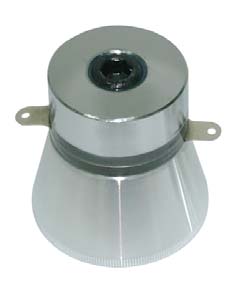
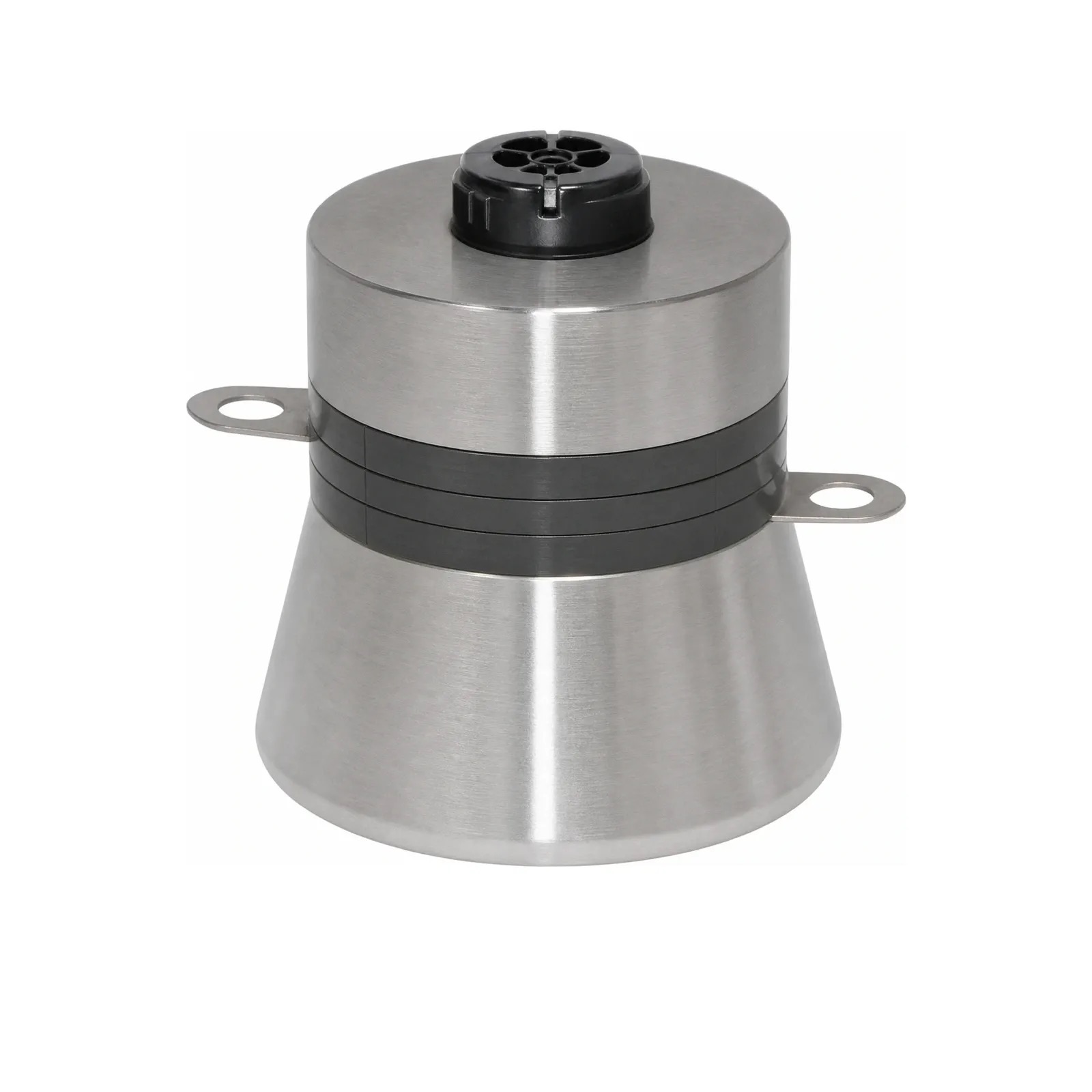
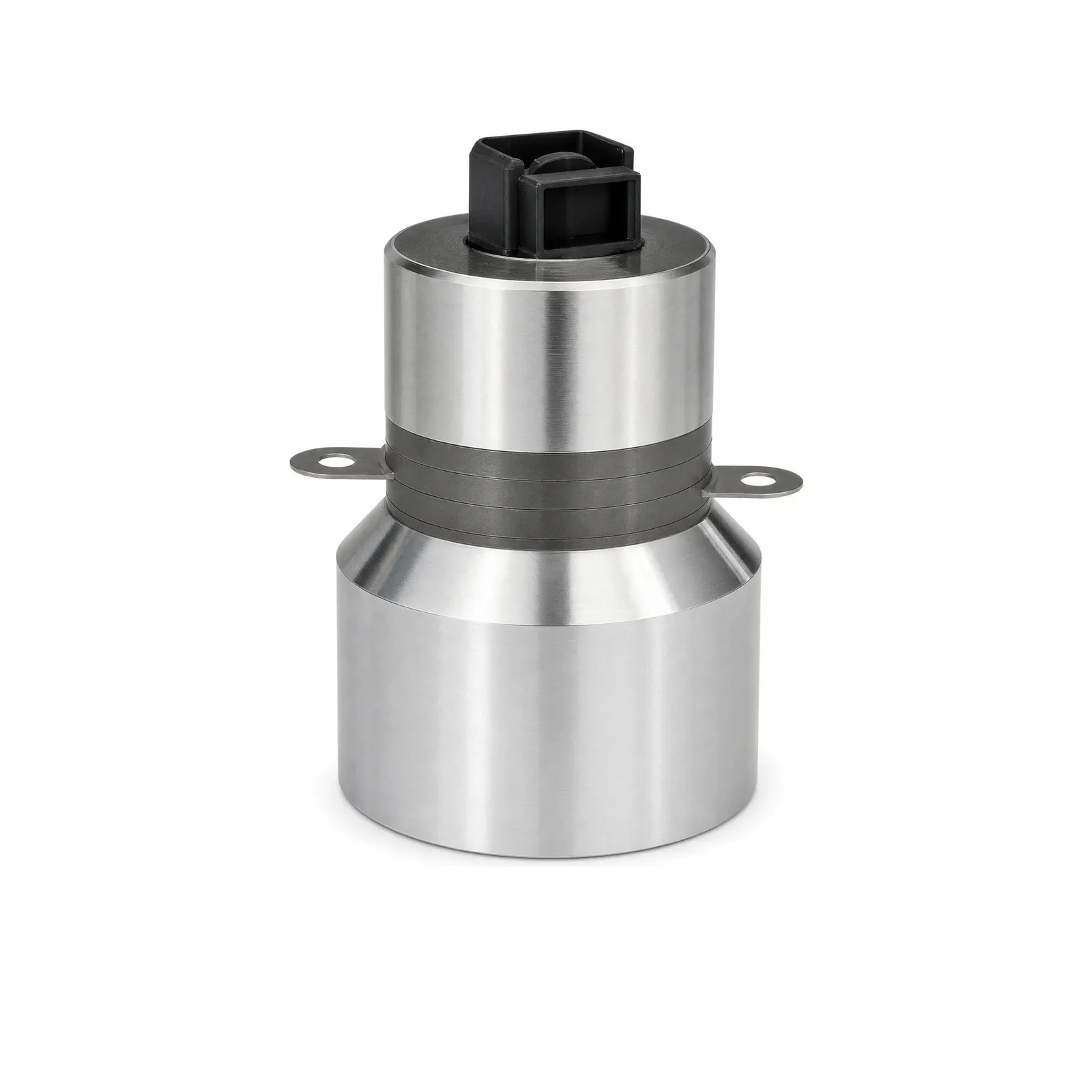
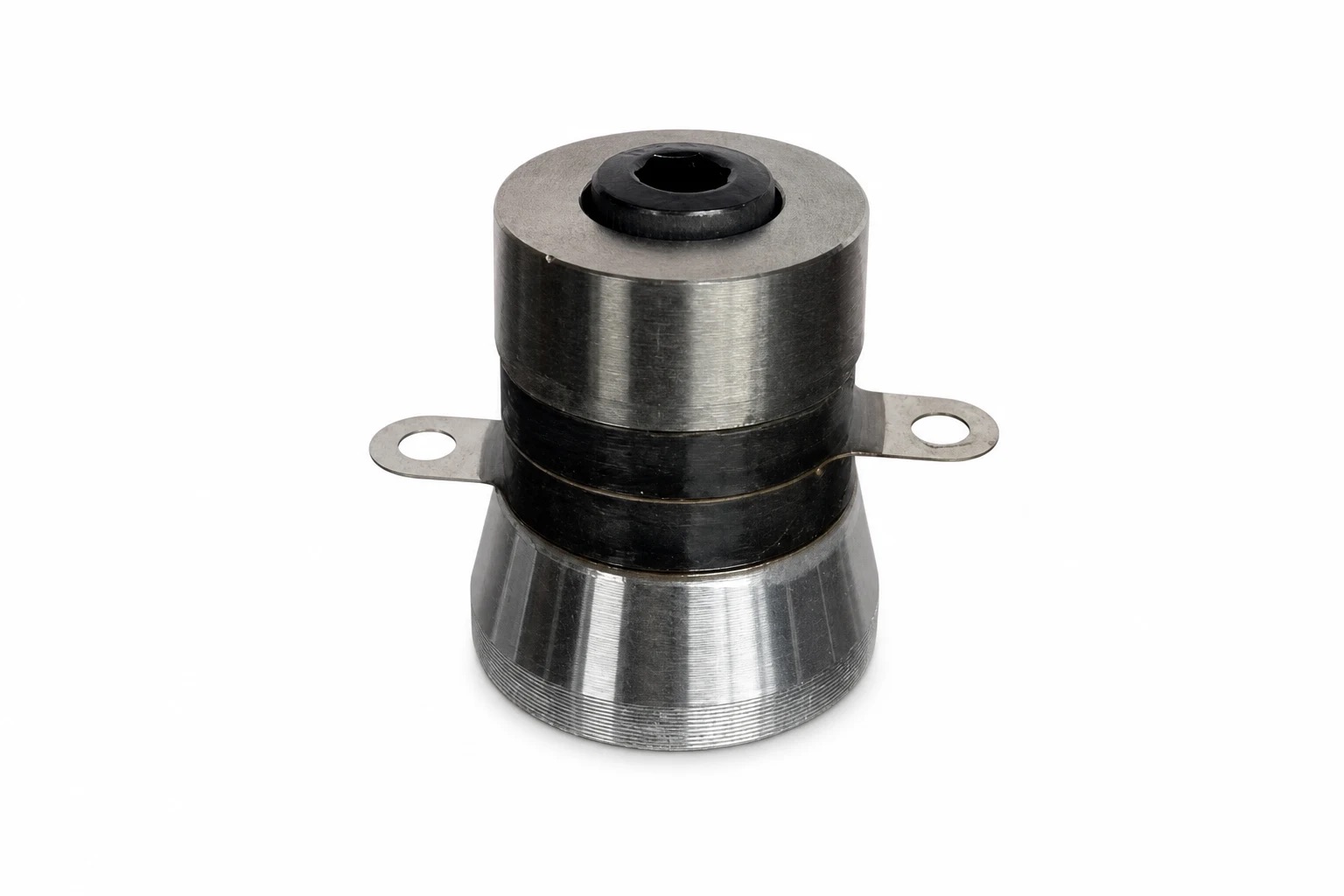
The current cleaning range covers 28 kHz, 40 kHz, 68 kHz, dual- and tri-frequency models, 100–200 kHz high-frequency models and a 965 kHz megasonic element for project-specific review.
RELATED PRODUCTS
Products for further comparison
These links help narrow the range; the final model still requires project-specific confirmation.
TECHNICAL FAQ
Common customer questions
Is a higher frequency always better?+
No. Frequency must match the contamination, part delicacy, tank, medium and power, then be verified on samples.
Can an online model directly replace an existing transducer?+
Direct replacement is not recommended. Confirm generator frequency, power, dimensions, load and the original system construction.